Department 03 · Shareware and History
Shareware and History
The long memory of the Mac: the shareware era, the indie developers who shipped by email, and the story of this domain itself.
On this page
The long memory of the Mac lives in this section. Before the App Store took a cut of every download, software travelled on floppy disks, magazine cover CDs and modem lines, and a lone developer in a Sydney suburb could publish a tool used around the world from a domain like this one. The heritage guides read that era the way a good workshop reads an old machine: with respect for what it could do, and no pretence that it is coming back.
Two guides, two kinds of memory
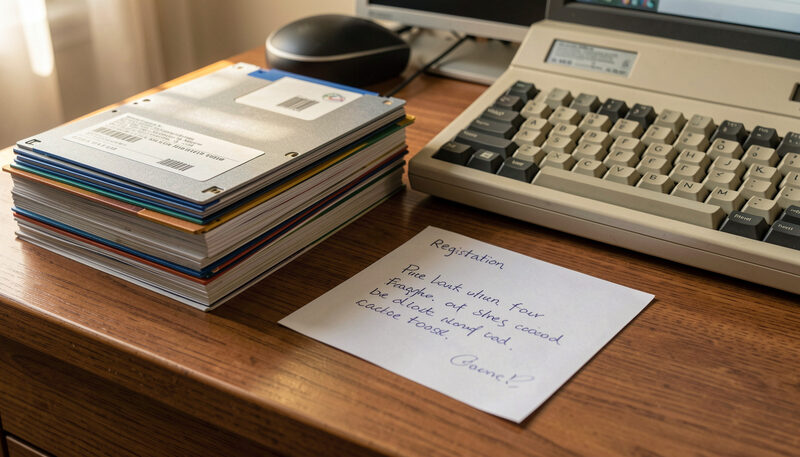
The Mac Shareware Era tells the wider story: try before you buy, registration by mail and card, payment processors such as Kagi, user groups that copied disks for members, and the small publishers who answered their own support mail. It follows what the era left behind, from the indie developers who still ship outside the store to habits like free trials that customers now take for granted. The Story of This Domain is the local record: for twenty years this address belonged to MacSOS, the Sydney software house of Dr Gerard Hammond, publisher of the SyBrowser database browser, the MacAT scheduler, Graph Pro and the Risky Business SOS safety register. The page keeps to the verifiable facts, dates and versions, because the story deserves the discipline the software was built with.
Why the history is useful and not just fond
The categories that filled shareware catalogues in 1999 are the categories that fill productivity lists today: database clients, schedulers, backup tools, small business registers. Reading how they were sold and supported explains much about how they are priced and updated now. It also explains the loyalties: a reader who registered a tool by postcard in 1998 has watched the same job be done by a subscription web app, and the comparison is worth making honestly. The heritage section makes it, in the same plain register as the rest of the magazine.
Reading the web archives like a local
The tools for this kind of history are public and free, and knowing them changes what a curious reader can verify. The Wayback Machine holds captures of millions of sites across decades, reachable by pasting an address into its search box; a site's captures spread across a calendar, and the trick is to compare a page across several years rather than trust one snapshot, because sites drifted, broke and rebuilt between captures. Directory listings of the era, and the Internet Archive's software libraries, preserve the discs themselves, read me files included, which is where the era's voice actually lives. A reader who spends an evening in those stacks understands why this section quotes prices and version numbers the way it does: not for nostalgia, but because the primary sources are still there for anyone to check.
How the record is kept
The facts on these pages come from the public archive of the site itself, from directory listings of the era and from the software's own published pages as captured at the time. Prices are quoted as facts of their day, in the currency they were listed in, and nothing described as historical is offered for sale here. Where the magazine adds context around a fact, the fact stays labelled as a fact and the context as context. The magazine that publishes these pages has no connection to the former company beyond the address it rents from history; the about page states the editorial position in full, and the legal notice records the practice.
The rules this section keeps
Three rules govern every heritage page, and stating them openly is part of the record. The former publisher is written about in the third person only, because the people behind the company owe this magazine nothing and are owed nothing by it. Prices, dates and version numbers are quoted as published at the time, never updated to modern equivalents and never presented as offers. And the academic work that once lived on this domain, a chemistry thesis under a public path, is noted as history but not republished, out of respect for the context it belonged to. The same rules will govern whatever the section adds next.
From memory to the workshop
History is the third section of the magazine for a reason: it feeds the other two. The shareware story deepens the retrospectives in Software and Tools, where SyBrowser and MacAT are revisited next to their modern counterparts, with the buying criteria the era's customers would recognise. And the maintenance habits in The Workshop are themselves an inheritance, distilled from the era when a Mac's owner was also its first line of support, when the manual came in the box and the fix came by email from the person who wrote the program. Read the era first or last; it reads well both ways.
Shareware and History
The Mac Shareware Era
Before the App Store there was shareware: try first, pay by mail, support by email. What that era gave the Mac, and where it survives.
Try first, pay by mail: how the model worked.
Shareware and History
The Story of This Domain
For twenty years this address belonged to MacSOS, a Sydney developer of Mac database, scheduling and safety software. The factual record.
MacSOS of Sydney, 1999 to 2019, from the archives.